01
Create one integrated governance framework
Governance is built into the way projects are planned, managed and reported. Project models, integrated Gantt planning, stage-gate structures, resources, status reporting and portfolio management use the same connected information.
This allows the organization to apply governance through normal project work instead of adding a separate control layer. Requirements defined through the project model become part of the project structure, while project data flows into reporting and portfolio oversight.
03
Establish a shared way of managing projects
Create project models that reflect the organization's chosen management approach. Models define stages, their sequence and the exit criteria associated with progression through the project.
Different models can be created for project types that genuinely require different structures. When a project is established, the selected model provides a common starting point for planning and governance while still allowing the project manager to develop the detailed activities required for the specific project. AI-assisted project creation can be combined with the selected model, giving new projects a faster and more consistent start without reducing the project manager's ownership of the result.
05
Maintain a complete audit trail
See who changed information, what was changed and when the change took place. The audit log provides traceability across relevant system activity and supports both operational follow-up and formal governance requirements.
Instead of relying on assumptions about how information was updated, administrators and responsible users can review recorded activity. This is particularly valuable when investigating unexpected changes, reviewing access-related actions or documenting how key information has been maintained.
06
Give users the right access
Control access according to each user's responsibility. System roles determine access to organizational functions such as project models, portfolios, resource management and user administration.
Projects and portfolios can also be shared with relevant users using READ, WRITE or OWNER permissions. This enables the organization to provide broad visibility where appropriate while limiting editing and administrative capabilities to the users responsible for the information.
07
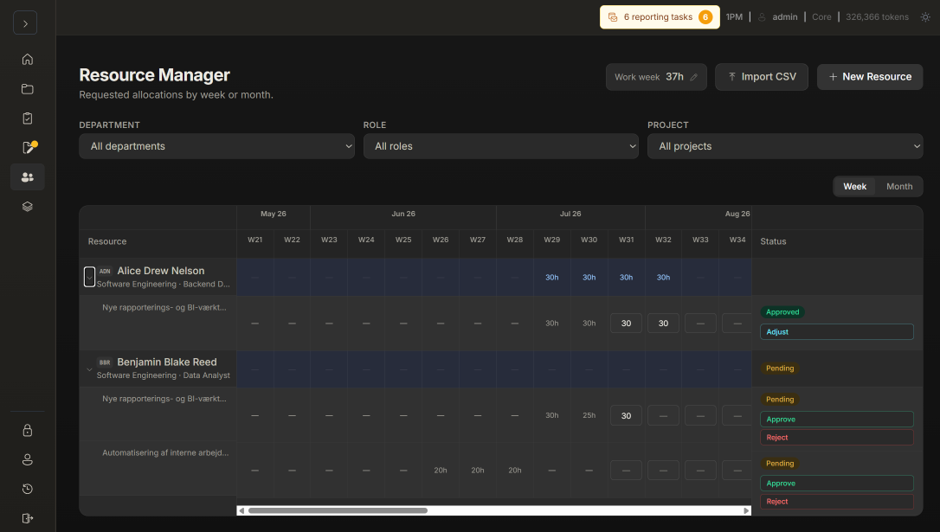
Coordinate resources across projects
Maintain a shared resource pool with relevant information such as organizational role, department and availability. Projects can submit allocation requests, which resource managers can review, adjust, approve or reject.
This provides a common process for connecting project demand with organizational availability. Resource decisions become visible in the system rather than being managed solely through email or isolated spreadsheets, supporting better coordination when several projects need the same people or competencies.
08
Support governance without creating parallel processes
Apply governance through the project work already performed in 1PM. Project definition, planning, risk management, status reporting and portfolio oversight are connected parts of the same solution rather than separate administrative exercises.
This reduces the need for duplicate registers, additional reporting templates and manually assembled governance packs. The result is governance based on current project information, with less additional work for project managers, PMO and portfolio managers.